
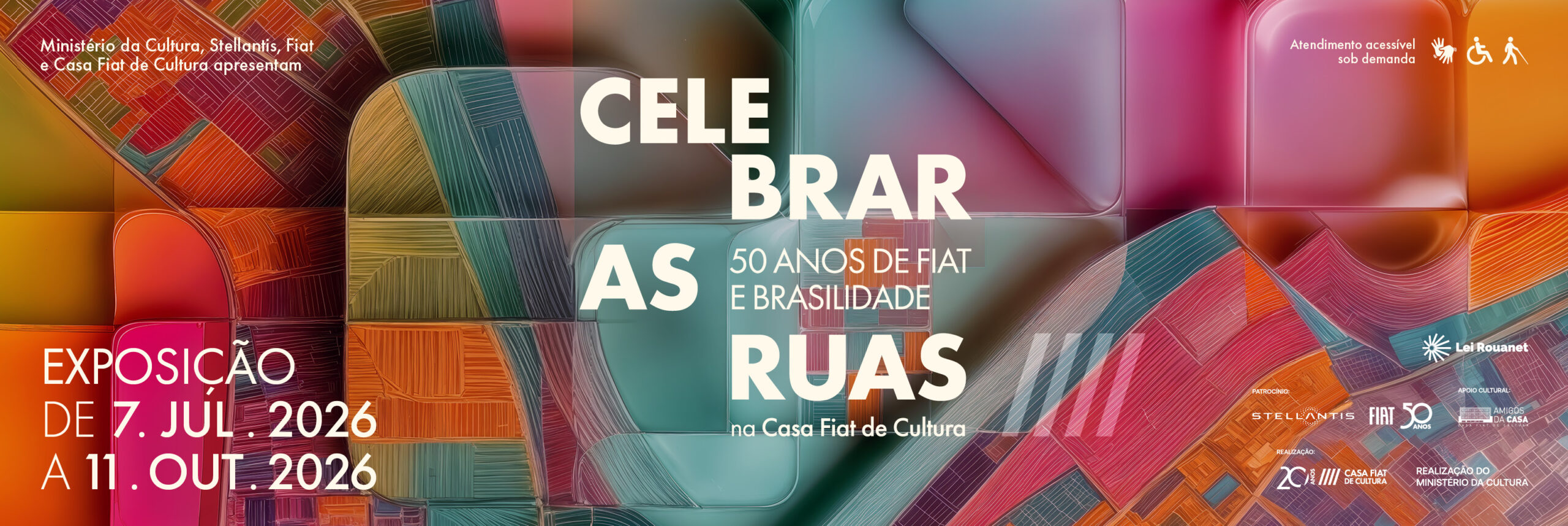
Inside the factory | The hand and the machine
INSIDE THE FACTORY | THE HAND AND THE MACHINE
The factory is a place of precision, effort, and invention. In Brazil, the industrialization of the 1950s transformed the urban landscape, the rhythms of work, and everyday life. Machines, assembly lines, and technical specialization came to symbolize efficiency, durability, and progress, sustaining the promise of a modern future. Art reflected this process, at times portraying the factory environment and, at others, incorporating its materiality and modes of organization.
In Fábrica (Factory), Djanira da Motta e Silva presents the assembly line within a frontal, geometrically structured space. Bodies and machines appear to respond to the same rhythm, as though the composition visually translated the discipline of serial production. In Siderurgia (Steel Industry), Yara Tupynambá reveals another perspective. Intense colors make the heat of the forge visible, while workers, pipes, and gears merge, and the worker seems to become part of the machine itself.
The factory photographs reveal the interplay between technical knowledge and manual practice. Here, the hand adjusts, tests, corrects, and invents solutions to enhance safety and performance. The engineering drawings reveal the precision of every component, bringing engineers and designers closer to the realm of aesthetic creation. The factory thus emerges not only as a place of production, but also as a space of continuous creation, where automobiles are conceived as objects of technological beauty.
ARTWORKS
Fábrica (Factory)
Djanira da Motta e Silva, 1962
Oil on canvas
James Acácio Lobo Lisboa Collection
Sem título (Untitled)
Wanda Pimentel, 1995
Acrylic on canvas
Courtesy of the artist and Fortes D’Aloia & Gabriel
Siderurgia (Steel Industry)
Yara Tupynambá, 1984
Charcoal and sanguine
Centro Cultural do TRT-MG Collection
PERSPECTIVES THAT SHAPE THE CITY (INSTALLATION)
Like the old slide viewers, the image is born from light and gesture. One must bring the eyes closer, adjust the focus, and choose a point of view. Seeing is an act of presence.
In the traffic cones that make up this installation — created especially for the exhibition — 64 journalistic photographs portray different views of Belo Horizonte and Betim, two cities that occupy a central place in the history of Minas Gerais.
The images span the years surrounding Fiat’s arrival in Brazil, a period marked by industrialization, urban growth, and the opening of new possibilities for life and work.
Each cone becomes a device for seeing and remembering. The experience of drawing closer, leaning in, and peering invites visitors to encounter the city and the time that shaped their paths. Streets stretch farther, neighborhoods take shape, and buildings redraw the skyline. Architecture and urban planning evolve with the arrival of industry, while new rhythms of movement, coexistence, and work begin to shape everyday life.
From one cone to the next, visitors witness not only the establishment of a factory, but also the invention of a way of living. Together, these transformations trace the journey of cities in motion, preparing to welcome the future — a future that is also built through the actions of those who look, walk, respect, and share the common space.
THE ART OF A LIFE’S PASSION (INSTALLATION)
Building a strong company and creating products that become part of everyday life and respond to the aspirations of those who use them is an act of passion. It is where creativity is sparked, innovation takes shape, care for others finds expression, and design discovers beauty in use. It is this invisible, deeply human force that transforms work into art and projects the future.
At Fiat, part of the Stellantis Group, it is people who preserve and drive this story of more than five decades. In this immersive space, six voices speak for thousands: more than 65,000 employees across Brazil and South America, along with those who helped build this journey.
Come closer. Listen. Step inside the factory, among its vast production halls, where ideas take shape and find their rhythm. Discover the stories of Miriam Cyrillo, Fiat’s first female engineer; Laylla da Cruz, a former player on the Brazilian Women’s National Football Team who reinvented her career at the company; Isabella Vianna, Stellantis Design Manager for South America, who imagines and designs cars; Flávio Salles, whose life has been dedicated to the Betim factory; Robson Cotta, a former Stellantis engineer who helped bring countless innovations to life; and José Eduardo de Lima Pereira, employee number 16, who took part in Fiat’s arrival in Brazil and in the creation of Casa Fiat de Cultura.
Praça da Liberdade, nº10, Funcionários | CEP: 30140-010 | Belo Horizonte/MG - Brasil
Tel: +55 (31) 3289-8900
Horário de funcionamento: terça a sexta-feira, das 10h às 21h; sábados, domingos e feriados, das 10h às 18h
Visitas agendadas sob consulta
TODA PROGRAMAÇÃO DA CASA FIAT DE CULTURA É GRATUITA

Atendimento acessível sob demanda, mediante disponibilidade da equipe.
Plano Bianual Casa Fiat de Cultura 2026
