
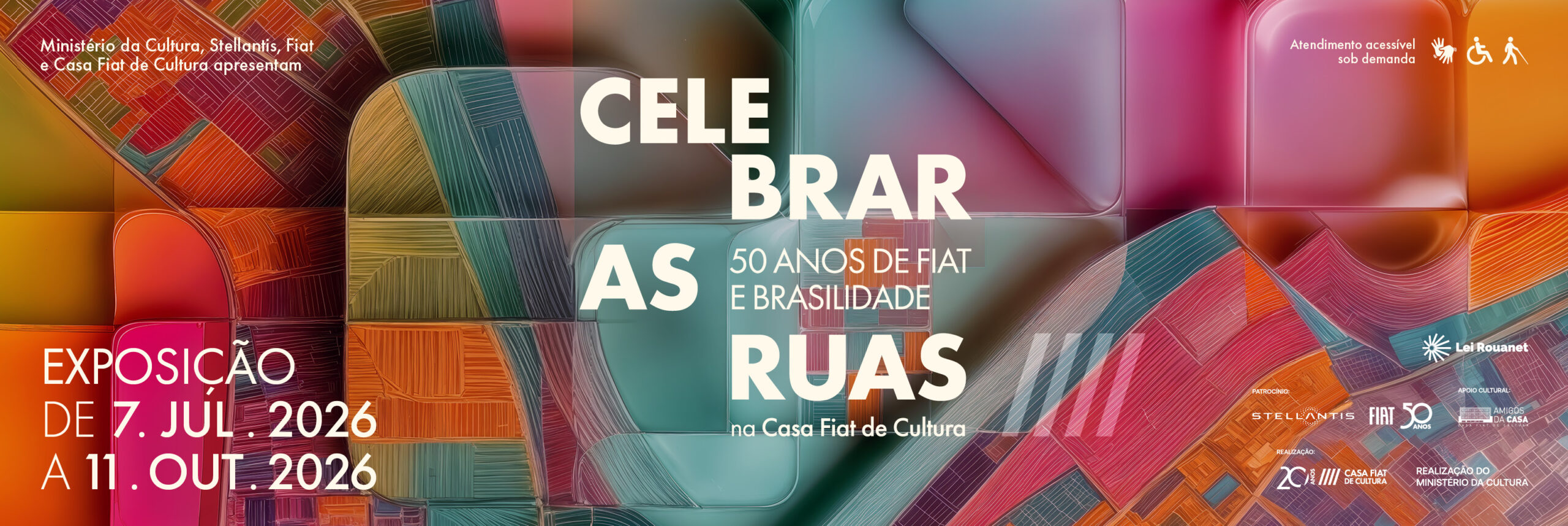
Brazilian fashion | A story in the making
BRAZILIAN FASHION | A STORY IN THE MAKING
The challenge of telling the story of fifty years of Brazilian fashion begins by recognizing that this story is still being written. Unlike older, more established traditions, it remains a work in progress. It is a “young woman coming into her own,” revisiting its origins while continuing to recognize the strength of its ancestry, the knowledge passed down through generations, the territories that shape it, and the many cultures that run through it.
Over the course of these five decades, fashion has evolved alongside the transformations of the country, reflecting the spirit of each era. In the 1970s, new ways of dressing expressed aspirations for freedom and individuality. The 1980s were marked by the expansion of consumer culture, the influence of television, and a more exuberant aesthetic. In the 1990s, anticipation of a new millennium brought urban and technological references, together with a renewed fascination with the future. From the 2000s onward, designer fashion came to the forefront, while craftsmanship, popular culture, and traditional knowledge assumed an increasingly prominent place. In the decades that followed, sustainability, diversity, and inclusion further expanded fashion’s role as a space for reflecting on contemporary society.
While other Brazilian artistic expressions have long explored their own territory as creative raw material, fashion followed a more winding path. For many years, it sought legitimacy in the world’s major fashion capitals. It was only in the second half of the twentieth century that it began to establish a voice of its own. Names such as Dener, Clodovil, Guilherme Guimarães, and Zuzu Angel helped consolidate a national creative field, while magazines, editorials, and fashion shows broadened interest in Brazilian fashion.
In the decades that followed, schools, courses, and training centers emerged. Television brought fashion into Brazilian homes, transforming costumes into phenomena of behavior and consumption. At the same time, the textile industry, production hubs, and spaces dedicated to designer fashion continued to grow. Fashion was no longer simply a market; it had also become a language capable of reflecting the country’s social, cultural, and aesthetic transformations.
Mercedes Tristão
Fashion Curator
FIAT AND FASHION | A LOOK AT TIME
Fiat’s presence in Brazil has always extended beyond the world of mobility. Throughout its journey in the country, the brand has established dialogues with design, architecture, art, and fashion, recognizing creativity as a fundamental part of contemporary culture. In the 2000s, Fiat established closer ties with initiatives connected to Brazilian designer fashion, supporting designers, events, and projects that contributed to the consolidation of the sector.
Celebrating Fiat’s 50 years in Brazil also means looking at the cultural paths intertwined with this history. Fashion, like the automobile, reflects ways of living, moving, belonging, and expressing oneself. It reflects the changes of time, reveals social tensions, embraces new technologies, and preserves gestures, techniques, and memories.
This exhibition continues that journey by bringing together the history of Fiat and Brazilian fashion — as a cultural language, a field of invention, and a territory of identity. By bringing together designers, garments, and narratives, it invites visitors to reflect on how fashion became one of the most significant cultural expressions of contemporary Brazil.
To look at fashion is to look at time. And understanding time is also a way of imagining the future.
ROOTS, INVENTION, AND THE FUTURE
The 1990s marked an important turning point for Brazilian fashion. The strengthening of the national textile industry and the consolidation of events such as Phytoervas Fashion, Morumbi Fashion Brasil — later São Paulo Fashion Week — Casa de Criadores, Fashion Rio, Minas Trend, and Dragão Fashion Brasil / DFB Festival created the conditions for the emergence of new voices and new forms of expression.
Although already present in the work of pioneering designers such as Zuzu Angel, references rooted in craftsmanship, popular culture, Indigenous and Afro-Brazilian heritage, landscapes, and traditional knowledge gained broader recognition and a more prominent place in contemporary fashion during this period.
What is now recognized as creative strength was once frequently dismissed as regionalism or folklore. Time, however, has a way of correcting certain distortions.
Today, Brazilian fashion engages in dialogue with the world without relinquishing its many references. Craftsmanship coexists with technological innovation. Small ateliers share space with large-scale production. Tradition and experimentation move forward side by side.
This exhibition does not seek to tell that entire story. That would be impossible. Instead, it presents a selection of artists, trajectories, and perspectives that help us understand how fashion became one of the defining cultural expressions of contemporary Brazil.
A journey shaped by fashion designers, seamstresses, pattern makers, embroiderers, photographers, journalists, schools, fashion weeks, and all those who, day after day, continue to build one of the country’s foremost fields of cultural creation.
FASHION PIECES
Mega Índigo and Silk Cape with Textures and Embroidery
Designer: Lino Villaventura
2023
Silk-thread embroidery and Austrian crystal bugle beads
Layered Tulle Dress
Collection: MAB FAAP
Designer: André Lima
2009
French tulle with 12 layers of soleil pleating
Trails-Paths-Mountains-Rivers-Streets Dress
Designer: Graça Ottoni
2026
Patchwork in silk georgette and chiffon. Seams embroidered with cotton thread and filled with PET soutache braid.
Amalfi Look
Brand: Tereza Santos para Pronta
2026
Crafted from Neotech knit fabric. Poem Jacket, by Gustavo Grecco.
Marquetry Dress — “The Apprentice Tourist in the Land of Grão-Pará” Collection
Designer: Ronaldo Fraga
2012
Crafted from Formica panels
The Sewing of the Invisible
Jum Nakao
2004
Digital print. Photograph by Sandra Bordin. Blouse and skirt in laser-cut tracing paper.
Folia de Reis
Brand: João Pimenta
2010
Trousers with lace appliqués, printed shirt, overcoat, and cloak with lace appliqués, cowrie shells, crystals, sequins, ribbons, and ornamental pendants.
Untitled
Brand: Cavalera
2009
Coat with panel construction in 100% cotton denim, worn over a laser-cut Safari poncho with stud appliqués.
Untitled
Designer: Isabela Capeto
n.d.
Cotton twill ensemble with hand-applied bias-tape embroidery. Embroidery by Fabrícia Lima, completed over 240 hours of handcrafted work.
Untitled
Designer: Lenny Niemeyer
2023
Buriti straw swimsuit
Untitled
Brand: Osklen
2026
Dress and jacket crafted from pirarucu leather
Golden Suit
Brand: Patricia Vieira
2025
Laser-worked leather
Áureo
Designer: Apartamento 03
2020
Macramé, tapestry, and braids crafted from Kanekalon fiber
Long Silver Crystal Embroidery Dress
Designer: PatBO
n.d.
Macramé, tapestry, and braids crafted from Kanekalon fiber
Fru Fru Coat — Blooming into Oneself
Brand: Flavia Aranha
2026
Organza dyed with brazilwood and black tea using natural dyes, hand-stitched into flower shapes
Rivers of Blood — Chico Mendes Collection
Brand: Dayana Molina
2025
Seed embroidery, weaving, straw, and crochet
Paleas Red Slit Dress with Scarf
Brand: Marina Bitu
2026
100% silk dress adorned with banana-fiber straw fringe
Praça da Liberdade, nº10, Funcionários | CEP: 30140-010 | Belo Horizonte/MG - Brasil
Tel: +55 (31) 3289-8900
Horário de funcionamento: terça a sexta-feira, das 10h às 21h; sábados, domingos e feriados, das 10h às 18h
Visitas agendadas sob consulta
TODA PROGRAMAÇÃO DA CASA FIAT DE CULTURA É GRATUITA

Atendimento acessível sob demanda, mediante disponibilidade da equipe.
Plano Bianual Casa Fiat de Cultura 2026
